How Many Sets Per Muscle Group Per Week?
Start a priority muscle around 8-12 challenging weekly sets, then let your results argue for more or less. Count direct work fully and secondary work from compound lifts fractionally. The goal is not to collect sets. It is to find the smallest dose that keeps progress moving.
 Maciej Glowacki
Start with roughly 8-12 challenging weekly sets for a priority muscle, then hold that dose long enough to learn from it.
If load or repetitions keep improving and recovery feels normal, you do not win extra points for adding sets. If a priority muscle stalls for several weeks while effort, technique, nutrition, and recovery are in place, add a small amount of work and watch what happens.
A 2017 meta-analysis by Schoenfeld et al. found a positive association between weekly set volume and hypertrophy. A larger 2026 meta-regression by Pelland et al. analyzed 67 studies and again found that more volume predicted more growth, with diminishing returns as sets accumulated.
Neither analysis established an exact target or upper limit for every muscle. Your useful dose depends on effort, exercise selection, indirect work, training history, sleep, nutrition, and recovery. Volume matters. It is not the only dial on the machine.
This guide gives you a defensible starting point, shows how to count overlapping exercises, and helps you adjust without turning every session into a volume contest.
Use this in the gym: Start around 8-12 challenging weekly sets for a priority muscle. Count direct work fully and secondary work from compounds as a rough half-set. Add 1-2 sets only when progress has stalled and recovery is good. Remove work when extra sets make performance, technique, or recovery worse.
But first: what counts as a "working set"?
A weekly total is only useful when the sets mean roughly the same thing. Two warm-ups, three hard sets, and one casual finisher are not six equivalent votes for growth.
A working set is a set intended to provide a meaningful training stimulus, performed with stable technique and enough effort to challenge the target muscle. A 2024 meta-regression by Robinson et al. found that hypertrophy tended to increase as sets ended closer to failure. It did not establish one RIR cutoff that makes every easier set worthless.
Sets stopped far from failure may provide less stimulus per set, especially with lighter loads, but context matters. Warm-ups prepare you for work sets; they are not failed attempts at hypertrophy and should not be counted in the weekly dose.
Count stimulus, not every set in the session. If you log 2 warm-ups and 3 challenging bench-press sets, count 3 direct chest sets. The triceps also worked, but not as the primary target; count that contribution fractionally when planning direct arm work. For effort guidance, read the RIR guide.
Low-value volume is work that costs more fatigue than it returns in useful stimulus. There is no validated cutoff where a set becomes junk. A sharp rep decline, worsening technique, joint discomfort, or repeated regression tells you to review the session. It does not let you calculate the exact rep where growth clocked out.
With that out of the way, here are practical starting ranges.
How many sets per muscle group
Muscles, exercises, and lifters differ in how much weekly work they tolerate. The research does not provide a validated minimum, ideal band, and ceiling for every muscle. The table below is coach-informed guidance for choosing an initial dose, not a set of universal scientific limits.
The evidence supports a positive dose-response with diminishing returns (Schoenfeld et al., 2017; Pelland et al., 2026). A 2022 review by Baz-Valle et al. found similar quadriceps and biceps growth between 12-20 and more than 20 weekly sets, but it included only 7 studies in young trained men and did not justify hard ceilings for every muscle.
| Muscle Group | Practical starting direct sets | Important indirect work | Useful distribution |
|---|---|---|---|
| Chest | 8-12 / week | Pressing is already direct chest work | 2 sessions |
| Back | 8-12 / week | Rows and pulldowns cover different regions | 2 sessions |
| Quads | 8-12 / week | Squats, leg presses, and split squats overlap | 2 sessions |
| Hamstrings | 6-10 / week | Separate hip-hinge and knee-flexion work | 2 sessions |
| Side delts | 6-10 / week | Pressing contributes, but less than lateral raises | 2-3 sessions |
| Biceps | 4-8 / week | Rows, pulldowns, and chin-ups count fractionally | 2 sessions |
| Triceps | 4-8 / week | Bench and overhead presses count fractionally | 2 sessions |
| Glutes | 6-10 / week | Squats, hinges, and split squats overlap | 2 sessions |
| Calves | 6-10 / week | Count loaded plantar-flexion work | 2-3 sessions |
These are starting points for direct work. The visualization below helps compare a range, but it should not be read as a validated ceiling for any muscle. Tap a bar for the breakdown:
Coach-informed direct-set starting bands
Practical first estimates, not validated optima or recovery ceilings.
Direct-set ranges mirror the guide's coaching defaults. Count indirect work separately and adjust from progress and recovery.
The table is a starting conversation. Three details keep it honest:
Triceps and front delts receive indirect volume from pressing. Every set of bench press or overhead press trains them, but not necessarily as much as a targeted isolation exercise. That is why direct arm starting ranges are lower.
The same applies to biceps. Rows, pulldowns, and chin-ups all train the elbow flexors. The 2026 Pelland et al. analysis found that counting indirect sets as roughly half a set fit the available dose-response data better than counting them as zero or as full direct sets. This is a planning estimate, not a precise biological conversion for every exercise.
Exercise selection changes what a set means. A pressing set may provide substantial triceps work, modest side-delt work, and direct chest work. Exercise technique and anatomy change those contributions, so fractional counting is more honest than pretending every compound set gives each involved muscle a full set.
Keep in mind: These are coach-informed starting ranges, not population-derived optima. Your response depends on exercise selection, effort, recovery, sleep, nutrition, and training history. Your log gets the final word.
How much should you do based on experience?
If the table above feels like a lot, start here instead:
- Beginner or returning lifter: Start near 6-10 challenging sets for a priority muscle, including fractional indirect work. Focus on technique, consistent effort, and progression before adding volume. Read the first month in the gym guide for a practical starting point.
- Consistent trained lifter: Start around 8-12 sets for a priority muscle. Hold the dose for 3-4 weeks and watch reps, load, technique, soreness, and motivation.
- Advanced lifter: Do not assume that training age automatically requires 20+ sets. Use your recent response as the guide. Add 1-2 weekly sets to a lagging muscle only when performance has stalled and recovery remains good.
Once you know your weekly set target, use the hypertrophy calculator to turn your 1RM into working weights for muscle-growth sets.
How to split your sets across the week
Do not cram every set into one heroic session if the later work turns sloppy. Spreading the same weekly dose across 2-3 sessions can preserve performance and technique.
A 2019 meta-analysis by Schoenfeld, Grgic, and Krieger found no meaningful hypertrophy difference between higher and lower frequencies when weekly volume was matched. Use 2-3 sessions when it helps you preserve effort and technique, not because frequency has a guaranteed growth bonus.
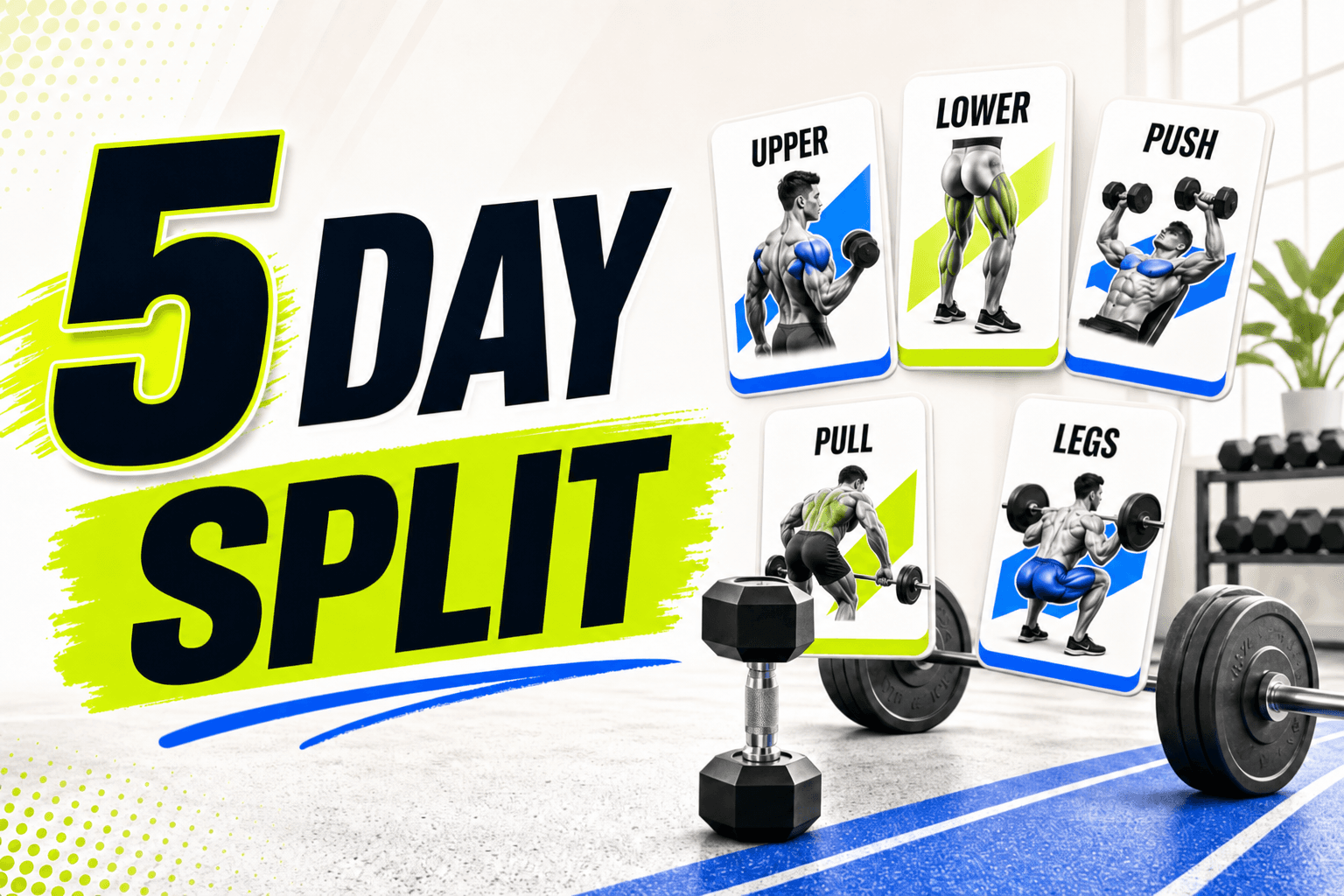
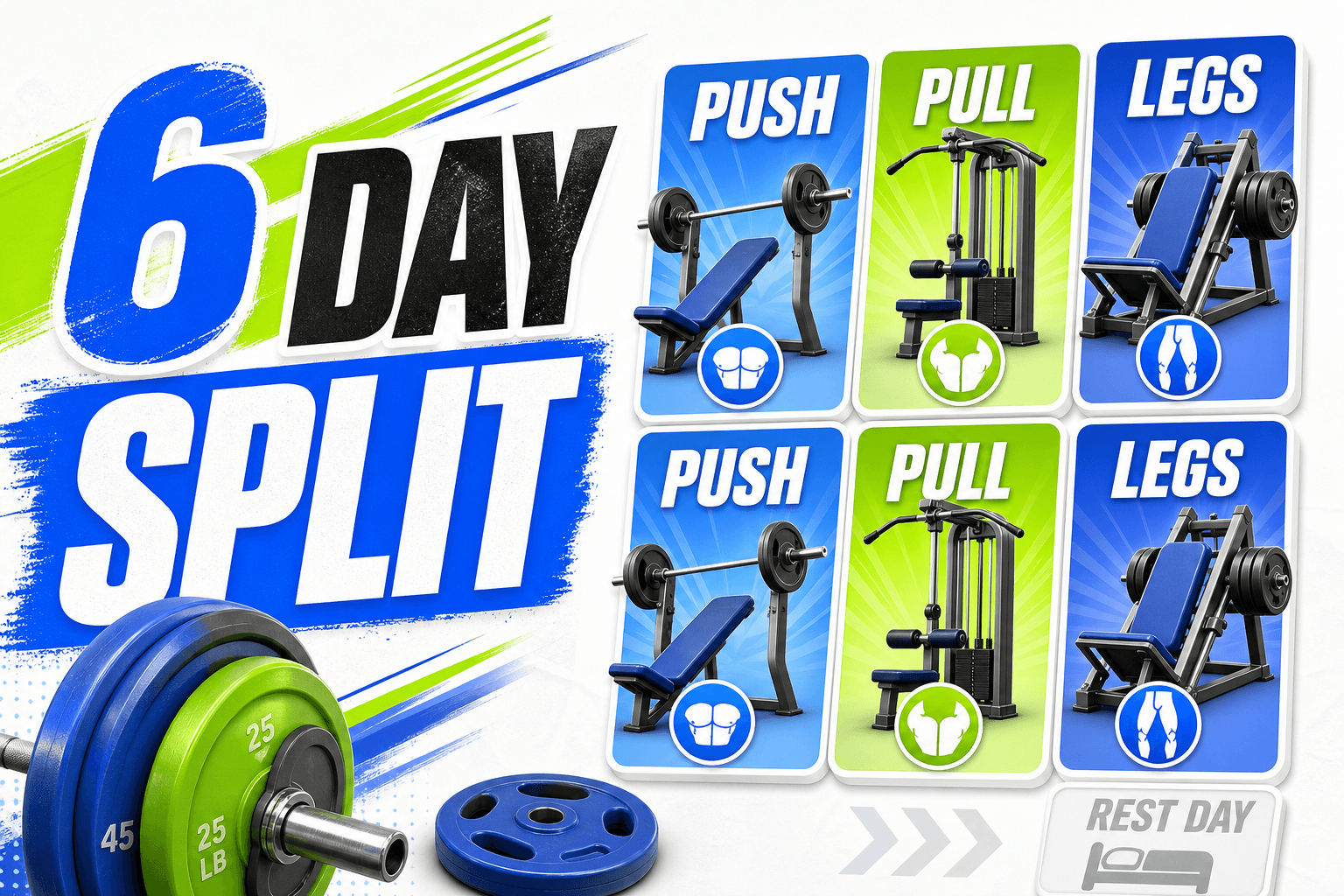
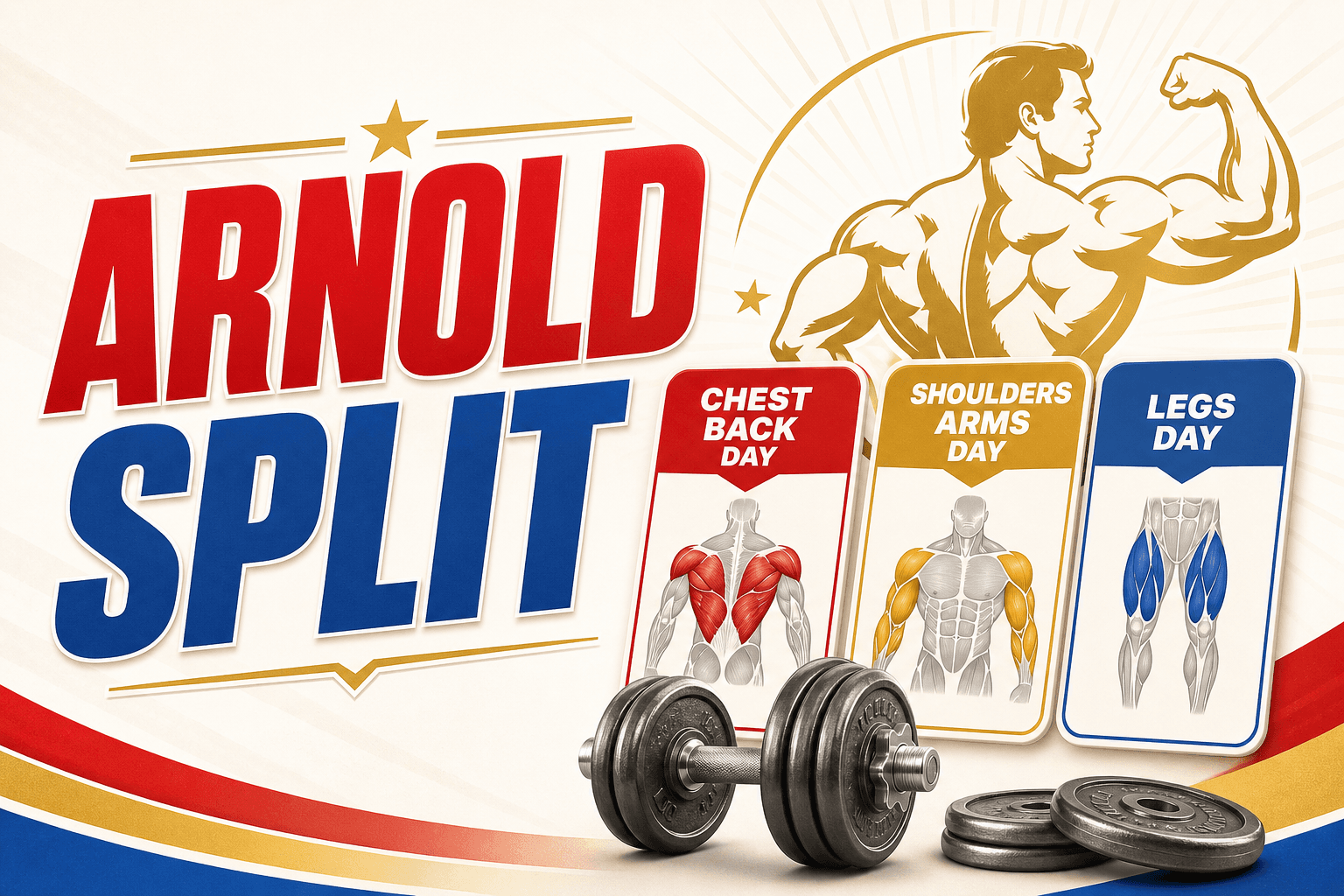
Here's how the same weekly volume looks across different splits:
How to distribute your weekly sets
Same weekly volume, different splits. Stacked bars show muscle breakdown per session.
Upper and lower body on alternating days. Good balance of volume and recovery.
Pick a workout split that fits your schedule and distributes your weekly work without sacrificing set quality. The 2026 meta-regression by Pelland et al. found frequency's independent hypertrophy effect compatible with being negligible.
Volume matters, but so do effort, exercise selection, progression, and recovery.
Common mistakes
Counting warm-up sets. Warm-ups prepare you for the working load. Do not count them as weekly hypertrophy volume. For work sets, proximity to failure is a continuum rather than a universal RIR cutoff.
Assuming more is always better. It is not. Baz-Valle et al. (2022) found no significant quadriceps or biceps difference between 12-20 and more than 20 weekly sets in young trained men. That does not create a universal 20-set ceiling, but it shows why expected gains and added fatigue must both be considered.
Not tracking volume at all. Memory tends to remember the glorious chest session and misplace the hamstrings. Count completed work by muscle so the week you trained can be compared with the week you planned.
Treating all muscles the same. Doing 15 direct sets for every muscle ignores indirect work, exercise overlap, and individual recovery. Use the table as an initial allocation, then adjust one muscle at a time.
Ignoring indirect volume. If you do 4 sets of rows and 4 sets of pulldowns, that is 8 direct back sets. As a planning estimate, it may count as roughly 4 fractional biceps sets before direct curls, not 8 full biceps sets.
The science behind these numbers
If you want to understand why these starting ranges are deliberately broad, here is what the research shows.
Brad Schoenfeld, PhD, and colleagues published a 2017 meta-analysis examining 15 studies and 34 treatment groups. It found a positive dose-response between weekly sets and hypertrophy, but its categories were broad and did not establish muscle-specific optima.
How to apply the volume dose-response
Research supports a positive average relationship with diminishing returns. It does not provide a precise “percent of maximum growth” curve for an individual.
- 01
Start recoverable
Choose a weekly dose you can perform with stable technique and recover from while other muscles are also trained.
- 02
Add only with a reason
Increase one muscle at a time when performance has stalled and recovery, effort, and exercise selection are already in place.
- 03
Expect diminishing returns
More weekly sets may add stimulus, but the likely benefit gets smaller while time and fatigue continue to rise.
More weekly sets tend to predict more growth, but the expected benefit shrinks as volume rises. The first useful sets do more work for your program than the final sets squeezed in because a chart made you nervous.
Pelland et al. (2026) reinforced this with 67 studies and 2,058 participants: the probability that volume's marginal slope for hypertrophy exceeded zero was 100% in their model, while the best-fitting relationship showed diminishing returns. Most participants were young adults and 79.1% were male, so the model describes population-level evidence rather than your exact optimum.
Volume landmarks
Coaches often use four practical landmarks to discuss volume. These are programming concepts, not validated universal thresholds:
Maintenance dose: Less work may maintain muscle than was needed to build it, but the exact dose depends on training status, load, and detraining context.
Starting dose (often 6-10 sets/week): A conservative place for a beginner, returning lifter, or newly prioritized muscle.
Productive range (often 8-15 sets/week): Enough work to progress for many lifters without assuming every muscle needs the same number.
Recoverability limit: The point where added work no longer improves results or starts reducing performance. It must be identified from your response, not a fixed chart value.
Start conservatively, hold the dose long enough to observe a trend, and change one variable at a time. Add 1-2 weekly sets when a muscle has stalled for several weeks despite consistent effort, exercise selection, progression, sleep, and nutrition. Reduce volume when performance, joint comfort, or recovery declines. Boring adjustments make clean experiments.
Turn these coach-informed ranges into a starting target for your schedule and priority muscles. The calculator explains what to adjust next.
Calculate my starting sets
Maciej Glowacki
Founder and CEO of Hypro. Built the platform from the ground up with years of hands-on lifting experience.