Best Workout Split for Hypertrophy: PPL, Upper/Lower, or Full Body?
The best workout split is the one that fits your real week and distributes enough challenging work without wrecking the next session. Full body suits many 3-day schedules, upper/lower fits 4 days neatly, and PPL becomes practical around 5-6 days. None has a special muscle-building advantage when weekly training is comparable.
 Maciej Glowacki
A workout split decides which muscles you train on which days. It organizes the work. It does not create the growth by itself.
A 2024 systematic review and meta-analysis included 14 studies and found no meaningful difference in muscle growth between split and full-body routines when weekly volume was matched. A 2019 meta-analysis reached a similar conclusion about training frequency when weekly volume was equated.
So choose the split that fits the days you can reliably train:
- 3 days: full body is a strong default.
- 4 days: upper/lower fits cleanly.
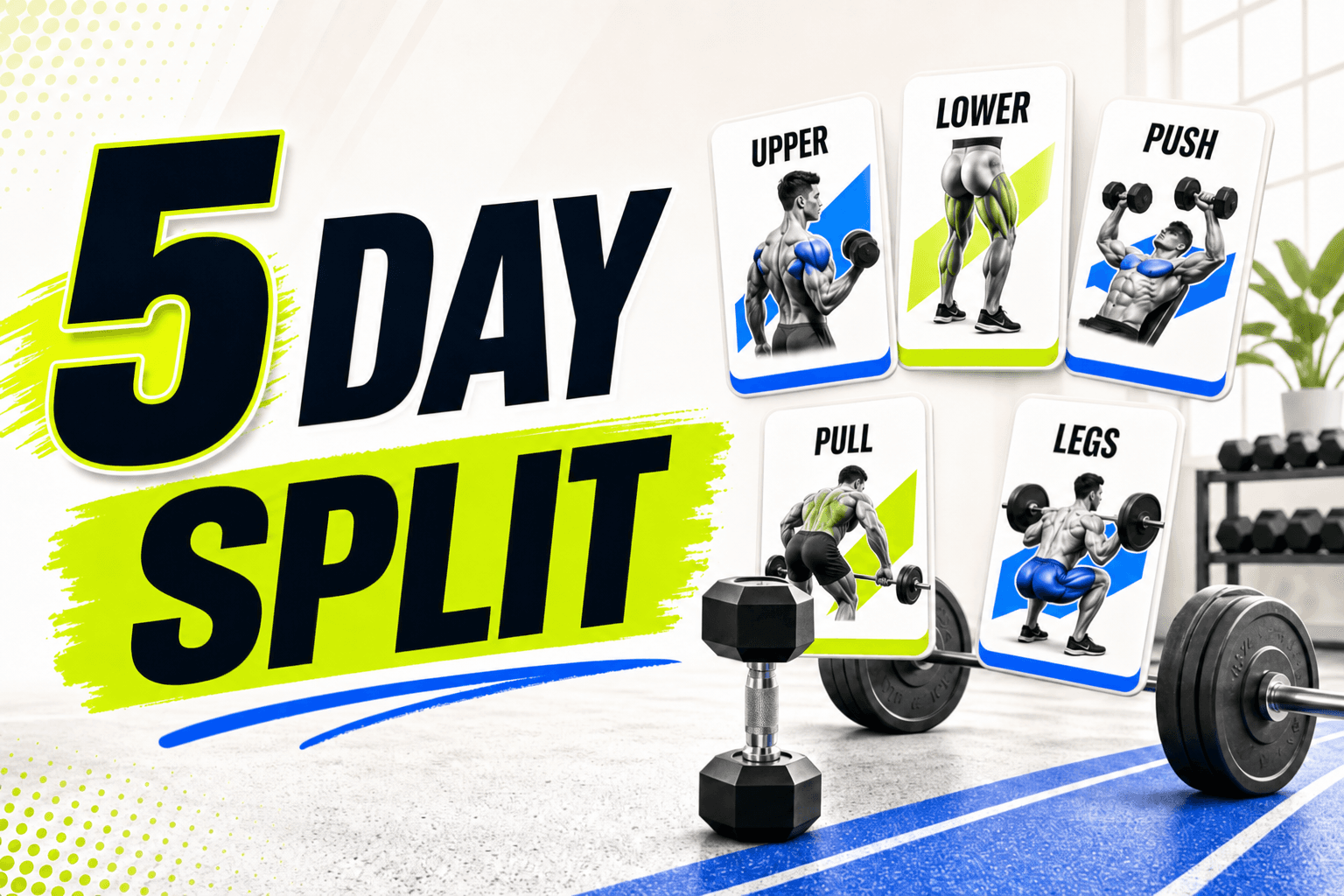
- 5 days: upper/lower plus a priority day, or a rotating PPL.
- 6 days: PPL repeated twice is straightforward.
These are useful defaults, not commandments carved into a squat rack.
Pick by your average week, not your fantasy week. A four-day plan completed consistently beats a six-day plan that loses legs every Friday. After choosing the schedule, track weekly sets, performance, and recovery for each muscle.
Full body vs upper/lower vs PPL
| Split | Common schedule | Main advantage | Main tradeoff |
|---|---|---|---|
| Full body | 2-4 days | One missed day is less likely to erase a muscle group's whole week | Sessions can grow long as volume rises |
| Upper/lower | 4 days | Easy twice-weekly distribution | Upper sessions can become crowded |
| Push/pull/legs | 3-6 days | Focused sessions and flexible exercise choice | Missed days can delay a whole movement group |
Frequency helps distribute work. Training a muscle twice per week can be more convenient than forcing all its sets into one session, but the evidence does not show a guaranteed hypertrophy bonus when weekly work is comparable.
Every workout split guide
Use the directory to move from a split idea to an actual plan:
| Split | Common days | Complete guide |
|---|---|---|
| Full body | 2-4 | Full body workout plan |
| 3-day split | 3 | 3-day workout split |
| Upper/lower | 4 | Upper/lower split |
| 4-day split | 4 | 4-day workout split |
| 5-day split | 5 | 5-day workout split |
| Push/pull/legs | 3-6 | Push/pull/legs split |
| 6-day split | 6 | 6-day workout split |
| Arnold split | 6 | Arnold split |
| Bro split | 5 | Bro split |
Training with limited equipment? Use the dumbbell workout plan or kettlebell workout plan.
Does your workout split matter?
Yes, because it affects adherence, fatigue, session length, exercise order, and set quality. No, because PPL does not contain a hidden hypertrophy switch.
The 2024 split-routine meta-analysis found comparable average muscle growth between split and full-body training when weekly volume was matched. The 2019 frequency meta-analysis found that higher and lower frequencies also produced similar hypertrophy under volume-equated conditions.
A 2026 dose-response meta-regression found that more weekly sets predicted more hypertrophy on average, with diminishing returns. Training frequency did not show a consistent independent hypertrophy effect. That makes frequency a useful scheduling tool: spread work when doing so improves the sets.
What is the best 3-day workout split?
Full body three times per week is a strong starting point. Every session covers the major muscle groups, so one missed day does not remove an entire week of leg or back training.
A simple structure alternates emphasis:
| Day | Main emphasis | Other work |
|---|---|---|
| Day 1 | Squat and horizontal press | Row, hamstrings, arms |
| Day 2 | Hinge and vertical press | Pulldown, quads, delts |
| Day 3 | Leg press or split squat and chest | Back, hamstrings, arms |
You do not need four sets for every muscle in every session. Distribute a recoverable weekly dose and keep each session focused. Beginners also benefit from practicing major movement patterns several times per week.
The tradeoff appears when a lifter needs enough work that full-body sessions become crowded. At that point, four shorter sessions may fit better.
Read the 3-day workout split guide for full workouts and alternatives.
What is the best 4-day workout split?
Upper/lower fits four days with very little scheduling gymnastics:
- Monday: upper body
- Tuesday: lower body
- Thursday: upper body
- Friday: lower body
Each muscle usually receives work twice per week. You can make one upper day press-focused and the other pull-focused, or keep both balanced. Lower days can separate squat and hinge emphasis.
Upper/lower is not biologically superior to full body. It simply gives you more room per session while preserving rest days. Read the upper/lower split guide or compare other 4-day workout splits.
What is the best 5-day workout split?
Five days does not fit a repeated PPL evenly inside one calendar week. You have two clean options:
Upper/lower plus a priority day: Train upper and lower twice, then use the fifth day for a muscle that needs extra attention.
Rotating PPL: Continue push, pull, and legs in order across weeks rather than resetting every Monday. The calendar changes, but the training sequence stays balanced.
Both can work. Pick the version you can follow without repeatedly sacrificing the same session. The 5-day workout split guide includes ready-to-run examples.
What is the best 6-day workout split?
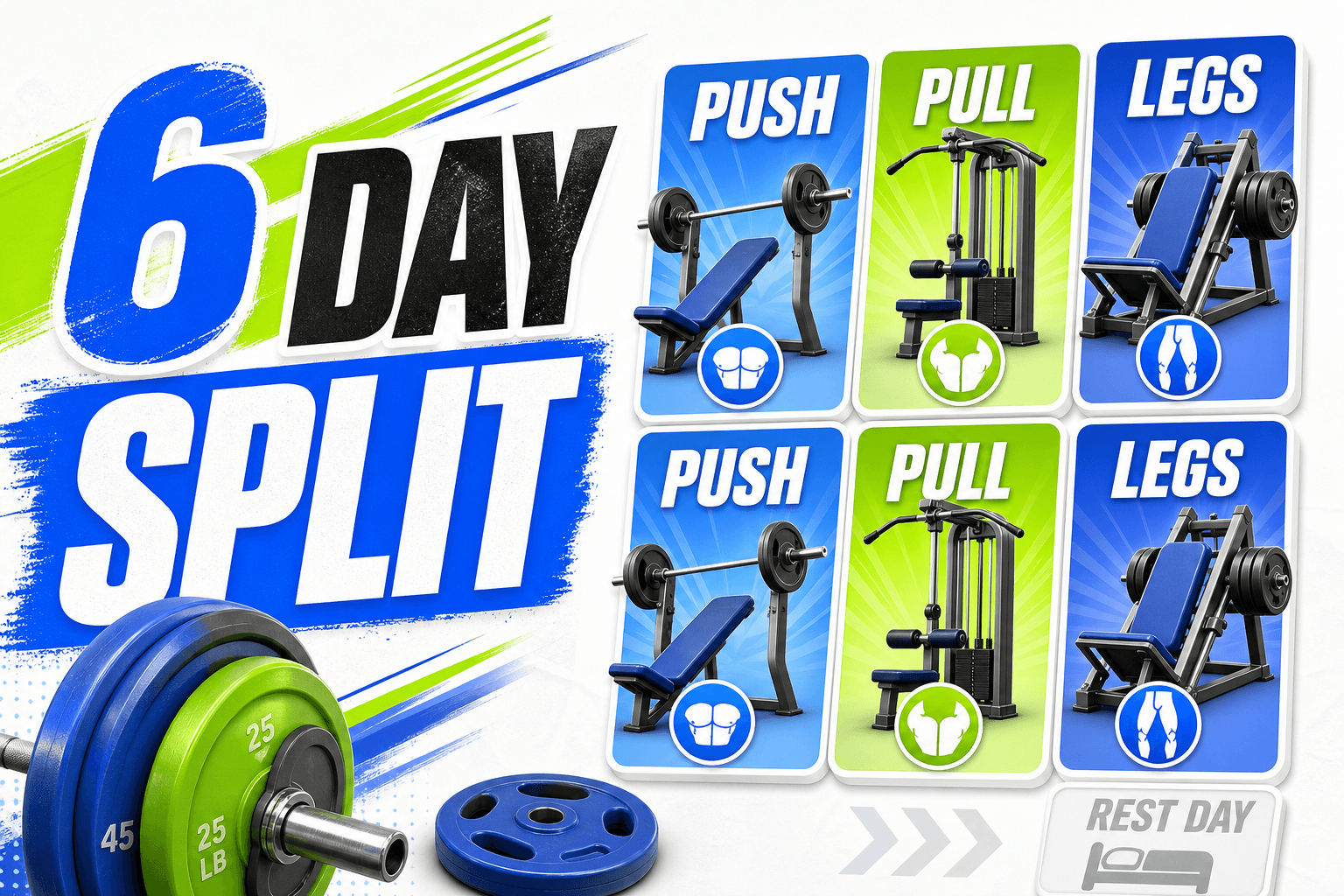
Push/pull/legs repeated twice is the obvious template:
- Push
- Pull
- Legs
- Push
- Pull
- Legs
- Rest
It offers focused sessions and easy twice-weekly distribution. It also leaves one full rest day. Six days is useful only when you enjoy frequent training, sessions stay recoverable, and life reliably leaves the space.
Do not choose it just because six sounds more serious than four. More gym days do not guarantee more productive weekly work.
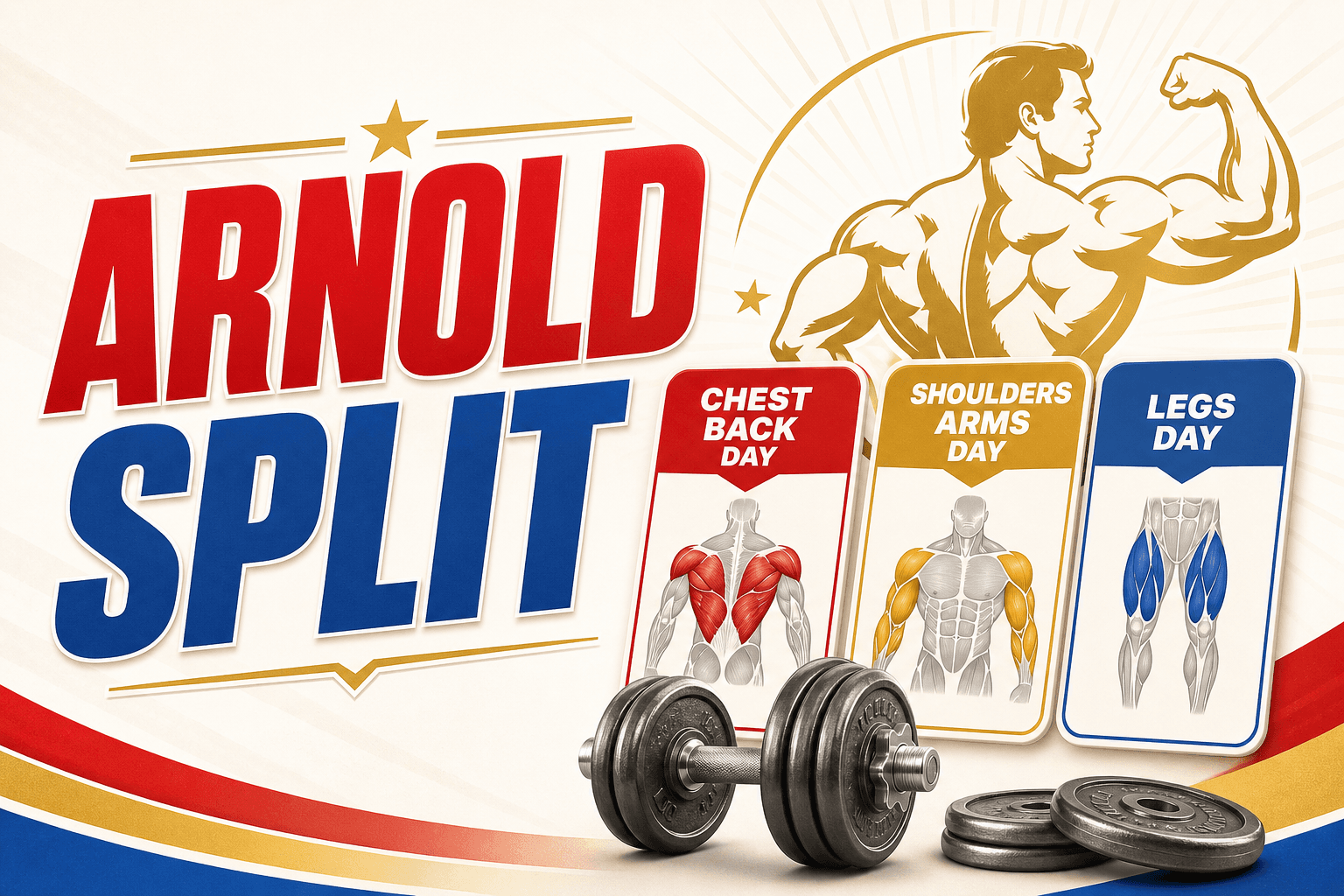
Compare PPL and the Arnold split in the 6-day workout split guide.
How many sets should each split include?
Start a priority muscle around 8-12 challenging weekly sets, including sensible fractional credit for compound exercises that train it secondarily. Hold the dose for several weeks, then adjust from progress and recovery.
The split only decides where those sets go. Twelve chest sets might appear as:
- Four sets in each of three full-body sessions.
- Six sets in each of two upper sessions.
- Six sets in each of two push sessions.
None of those distributions automatically wins. Choose the one that keeps the later sets technically sound and appropriately challenging. Read how many sets per muscle group per week for the evidence and counting method.
How to choose your workout split
Ask five questions:
- How many days can I train during a normal week? Use the repeatable number.
- How long can each session be? More days can shorten sessions, but they add travel and setup.
- Which muscles are priorities? Give them good positions in the week, not leftover minutes.
- How do I recover? Consider sleep, nutrition, other sports, work, and joint tolerance.
- What do I enjoy enough to repeat? Preference matters because adherence changes the dose you actually complete.
Training status can influence complexity, but beginners do not require full body and advanced lifters do not require PPL. Match the plan to the person, not the label.
How to know whether your split works
Keep it when:
- Load or repetitions improve at similar technique and RIR.
- Priority muscles receive their planned weekly work.
- You recover before the next exposure.
- Missed sessions are occasional rather than structural.
- You can follow it for months without constantly rearranging the week.
Review it when one muscle always gets poor-quality work, sessions regularly run too long, the same day keeps getting skipped, or recovery declines across several weeks.
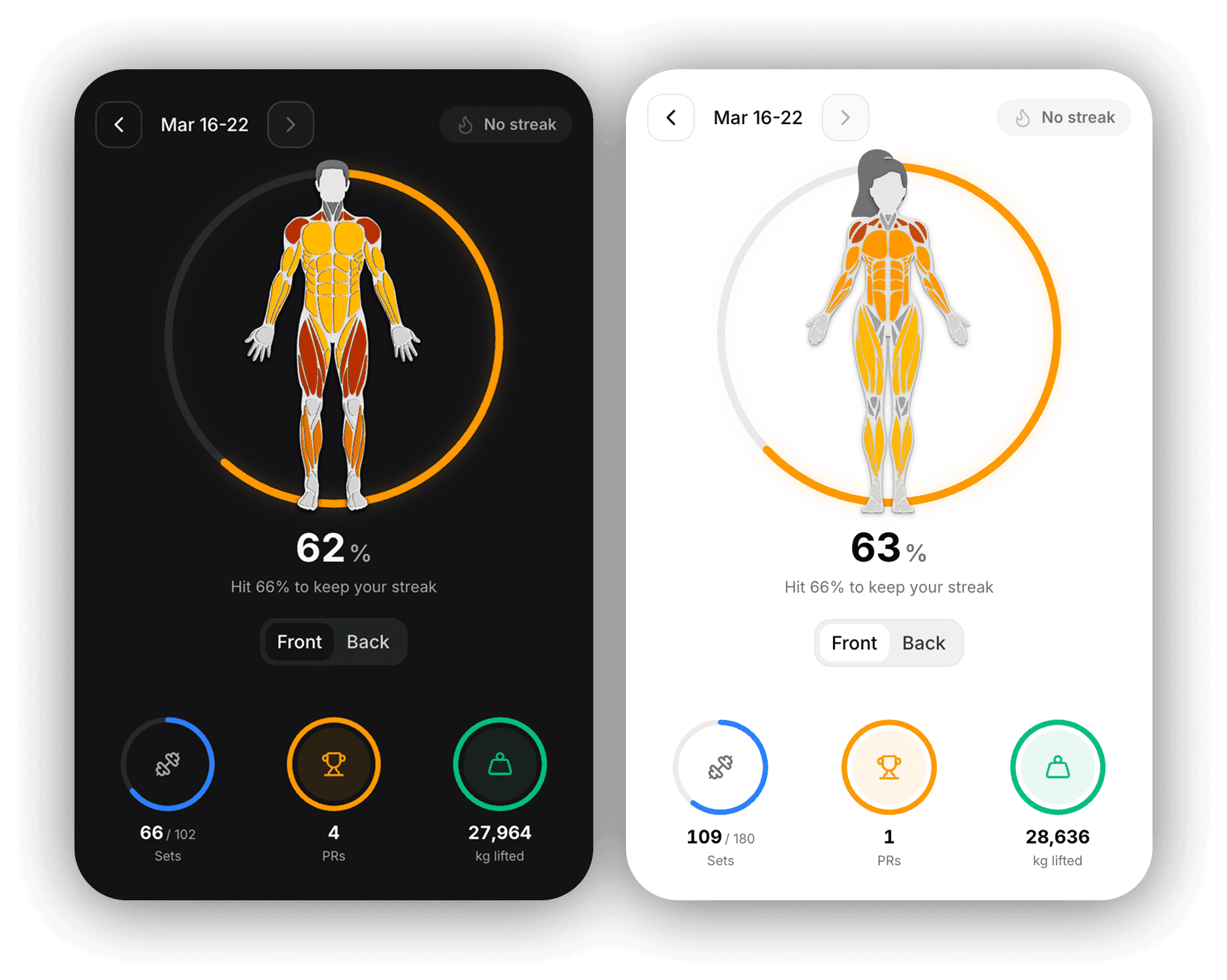
Hypro shows completed weekly sets by muscle group, so the plan and the week you actually trained do not have to pretend they are the same thing.
Common workout-split mistakes
Choosing by popularity. A famous split still has to fit your week.
Resetting a rotating split every Monday. On a five-day PPL, continue the sequence or the same muscle group may keep losing work.
Counting days instead of muscle work. Six gym visits can still undertrain a priority muscle.
Treating every compound set as a full set for every involved muscle. Count primary work fully and secondary work fractionally when planning direct arm or shoulder work.
Changing the split before checking progression. A stall may come from effort, recovery, exercise choice, or volume. The weekly labels are rarely the whole diagnosis.
Leaving RIR out of the log. Hypro uses RIR. Keep the effort language consistent so comparisons stay clear.
Compare coach-built plans by schedule, preview a real workout, and choose the split that fits your normal week.
Browse training plans
Maciej Glowacki
Founder and CEO of Hypro. Built the platform from the ground up with years of hands-on lifting experience.