Creatine: The Complete No-BS Guide
Creatine is one of the rare gym supplements with a simple answer: use creatine monohydrate, take 3-5 g daily, and do not worry about perfect timing. This guide explains what it can improve, what it cannot, and which safety concerns deserve a real conversation instead of another locker-room myth.
 Maciej Glowacki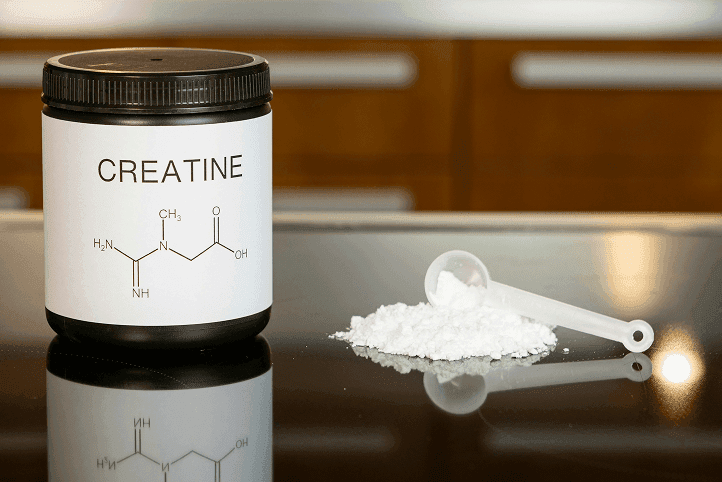
Take 3-5 grams of creatine monohydrate every day. That is the protocol most people need.
Loading is optional. Timing is a minor detail. The expensive forms do not have better outcome evidence than monohydrate. If a supplement label needs half a page to explain why its creatine is special, your wallet is probably doing more work than your muscles.
Creatine helps replenish phosphocreatine, which supports rapid energy turnover during hard, repeated efforts. In practice, it can modestly improve strength and lean-mass gains when combined with resistance training. It cannot rescue inconsistent training, poor sleep, or a diet that never reaches your protein target.
Key takeaways: Use creatine monohydrate at 3-5 g per day. Loading reaches saturation faster but is not required. Resistance-training studies generally find modest improvements in strength and fat-free mass. A 2025 review of 685 trials found similar reported side-effect rates in creatine and placebo groups. Research does not show kidney damage in healthy users at standard doses, and a 2025 trial did not find increased hair loss. People with kidney disease, relevant medical conditions, or medication concerns should ask a clinician first.
How does creatine work?
ATP is the energy your muscles spend when they contract. During a hard set, the small amount immediately available is used quickly.
Creatine is stored partly as phosphocreatine. That store helps recycle ADP back into ATP during short, intense efforts. Supplementation increases total muscle creatine stores for many people, giving that rapid energy system a little more capacity.
You might complete an extra rep, preserve performance a little better across repeated sets, or accumulate more quality work over time. The effect is useful, not cinematic. It matters most in lifting, sprinting, jumping, and other repeated high-intensity efforts.
What does creatine do?
The most relevant question is not whether creatine "works." It is how large the benefit is and whether it matters to you.
Strength. A 2024 meta-analysis by Schoenfeld, Forbes, and Candow of adults under 50 found creatine supplementation with resistance training increased upper-body strength by 4.43 kg and lower-body strength by 11.35 kg compared to placebo.
Muscle mass. A dose-response meta-analysis of 61 trials by Ashtary-Larky et al. (2025) found creatine increased fat-free mass by 1.39 kg. A separate 143-study analysis by Pashayee-Khamene et al. found +0.82 kg fat-free mass and -0.28% body fat.
Older adults. A 2025 meta-analysis by Stares and Bains reported small improvements in some strength and body-composition measures when creatine was combined with exercise. Results differed across outcomes, so the pooled estimate is more useful than treating one kilogram figure as a personal forecast.
Training status. One 2025 subgroup analysis reported larger average fat-free-mass effects in trained than untrained groups. That comparison does not prove creatine works better because someone trains harder; subgroup results can reflect differences among the included studies.
The effects are modest. That is still valuable when the supplement is inexpensive and easy to use. Think of creatine as a small advantage attached to months of good training, not a shortcut around them.
Can you take creatine without working out?
You can take creatine without working out, but the strongest case for a healthy lifter is still creatine plus resistance training. Research on the brain is promising and more mixed than supplement marketing suggests.
Brain function. A 2024 systematic review and meta-analysis included 16 randomized trials with 492 participants. It found a small benefit for memory with moderate-certainty evidence. Results for attention and processing speed were lower certainty, and overall cognition and executive function did not significantly improve.
Stress and sleep deprivation. Some small studies report benefits when sleep is restricted or cognitive demand is high. That is an interesting research direction, not a promise that creatine fixes poor sleep.
Vegetarians and vegans. Dietary creatine comes mainly from animal foods, so people who avoid meat often begin with lower stores and may respond strongly to supplementation. The size of that difference varies by tissue, diet, and study. It should not be turned into one universal percentage.
Aging. Research in older adults supports pairing creatine with resistance training to improve some strength and body-composition outcomes. Claims about preventing cognitive decline or treating sarcopenia are not settled enough to present as guaranteed benefits.
Be honest about the limits. The current meta-analysis supports a small memory benefit, while attention, processing speed, overall cognition, and executive function are less certain or did not improve significantly. Subgroups such as sleep-deprived people or vegetarians are interesting, but the evidence is not strong enough to promise that they will feel a clear mental effect.
Should I take creatine? Who benefits most
- People doing resistance training. This is where the evidence is most useful. Expect a modest advantage, not a different physique by next month.
- Vegetarians and vegans. Dietary creatine comes mainly from animal foods, so lower baseline stores are plausible. Whether that produces a noticeably larger response varies by outcome and study.
- Older adults. Reviews support creatine alongside resistance training for some strength and body-composition outcomes. The size and consistency of the benefit depend on the program and population.
- Women. Creatine is not a men's supplement. Research includes potential applications across different life stages, but pregnancy and medical use deserve clinician guidance rather than a blanket recommendation.
- People interested in cognitive effects. Memory findings are encouraging, while several other cognitive outcomes remain uncertain. Treat this as a possible secondary benefit.
- Athletes in any sport requiring explosive power. Sprinting, jumping, throwing, combat sports, team sports.
How much creatine should I take?
Keep it simple. There are only two decisions that matter: how much and which type.
Dosing
| Protocol | How | When saturated | Best for |
|---|---|---|---|
| No loading (recommended) | 3-5g per day | Roughly 3-4 weeks | Most people. Simple and usually easier on the stomach. |
| Loading phase | 4 x 5g per day for 5-7 days, then 3-5g per day | 5-7 days | If you want faster saturation (competition, time-sensitive goal). |
Both protocols aim for the same practical endpoint: higher muscle creatine stores. Loading gets there faster. A smaller daily dose gets there more gradually. After that, 3-5 g daily is the common maintenance approach.
Timing is a minor detail. Research has not shown a consistent practical advantage to taking it immediately before or after training. Breakfast, dinner, and a post-workout meal can all work. Consistency matters more.
Food is optional. Carbohydrate and protein can increase creatine retention in some studies, but there is no good reason to build your day around this detail. Take it with a meal if that helps you remember or reduces stomach discomfort.
Which type of creatine
| Type | Research | Cost | Verdict |
|---|---|---|---|
| Monohydrate | Largest and most established outcome evidence | Usually the least expensive | Use this. |
| HCl (Hydrochloride) | Better solubility, but little comparative outcome research | Usually higher | No demonstrated outcome advantage. |
| Buffered (Kre-Alkalyn) | Jagim et al. (2012) found no advantage over monohydrate | Usually higher | No demonstrated outcome advantage. |
| Ethyl Ester | Spillane et al. (2009) found it less effective than monohydrate | Usually higher | Choose monohydrate instead. |
The practical verdict is simple: monohydrate has the strongest evidence and usually costs the least. If it mixes poorly, micronized monohydrate may be easier to drink, but it is not a more powerful form.
When to take creatine: before or after workout?
This is one of the most searched creatine questions, and the honest answer is: it barely matters.
A 2022 study comparing pre-workout vs post-workout creatine found similar muscle gains after 8 weeks in both groups. What matters far more than timing is taking it every day, including rest days.
The practical answer is to attach it to a habit you already keep. Breakfast, dinner, or your post-workout meal all work.
How long does creatine take to work?
It depends on your protocol:
- Without loading: 3-4 weeks to fully saturate muscle creatine stores
- With loading (20g/day for 5-7 days): Fully saturated within the first week
You may notice some water-weight gain as muscle creatine stores rise, especially after loading. Performance changes are not always obvious from one session, which is another reason to judge creatine alongside weeks of consistent training.
Is creatine safe? Side effects explained
This is the section most guides get wrong. They either dismiss all concerns or repeat myths as fact. Here's what 685 clinical trials actually found.
The broad safety picture: A 2025 analysis of 685 clinical trials found reported side effects in 13.7% of creatine groups and 13.2% of placebo groups. That review supports a reassuring overall safety profile, but it does not replace individual medical advice or make every dose appropriate for every condition.
What's real
Water-weight gain. Creatine can increase body water as stores rise. The size and timing vary, and a loading phase can make the change happen faster. Some people notice little; others notice the scale or a fuller muscle appearance.
Mild GI discomfort (dose-dependent). The 685-trial analysis found GI issues in 4.9% of creatine users vs 4.3% placebo. Barely different. If you experience stomach discomfort, split your dose (don't take 5g+ at once) and take it with food. Loading at 20g/day is the main culprit for GI issues.
Weight gain. 1-2 kg from water retention, plus whatever muscle you build over time. This is not fat gain. If you're competing in a weight class sport, account for it.
What's not real
Kidney damage. This is the most persistent myth. Creatine increases creatinine levels in your blood (creatinine is a breakdown product of creatine). Creatinine is what doctors measure to estimate kidney function. So creatine users can show artificially elevated creatinine on blood tests without any actual kidney impairment. Multiple studies using direct kidney function markers find no damage in healthy individuals. If you're getting blood work done, tell your doctor you take creatine.
Hair loss. This claim traces back to a single 2009 study (van der Merwe et al.) on college rugby players that found elevated DHT levels (a hormone linked to hair loss in genetically predisposed individuals). But DHT levels stayed within normal range. A 2025 randomized controlled 12-week trial specifically tested this claim and found no link between creatine and hair loss. Multiple subsequent studies found no creatine-testosterone-DHT connection.
Dehydration and cramping. Controlled research has not shown that standard creatine use increases dehydration or cramping in healthy users. Normal hydration habits still matter, especially in heat.
Liver damage. Standard-dose studies in healthy users have not established liver damage. Existing liver disease or abnormal tests still deserve individual medical advice.
Who should NOT take creatine
Standard creatine doses have a reassuring safety record in healthy adults. Ask a clinician before using it if any of these apply:
- Kidney disease or abnormal kidney tests. Creatinine-based lab estimates can also be harder to interpret while supplementing.
- Medication or a condition that affects kidney function or hydration. A clinician can assess the combination rather than relying on a generic internet list.
- Pregnancy, breastfeeding, or adolescence. Research is developing, but these situations deserve individualized guidance.
If you are healthy and tolerate it, 3-5 g daily sits inside the dose range used throughout a large research base. Tell the clinician interpreting your blood work that you take creatine.
What to do
Creatine monohydrate is inexpensive and has an unusually large sports-nutrition evidence base. It will not replace useful training. If you already train consistently and track your weekly volume per muscle group, it can add a modest average advantage over time.
3-5 grams per day. Monohydrate. With food. Every day. That's it.
Already training? Use Hypro to track weekly sets, RIR, and progression so a small supplement effect never gets confused with the work that produced it.
Try Hypro free
Maciej Glowacki
Founder and CEO of Hypro. Built the platform from the ground up with years of hands-on lifting experience.