Gym Supplements: What Actually Works (The Honest Guide)
Most lifters need fewer supplements than the label shelf suggests. Creatine can add a small performance advantage. Protein powder can make a daily target easier to reach. Caffeine can improve a session if it does not wreck your sleep. Everything else needs a more specific reason. This guide helps you spend money on the bottleneck you actually have.
 Maciej Glowacki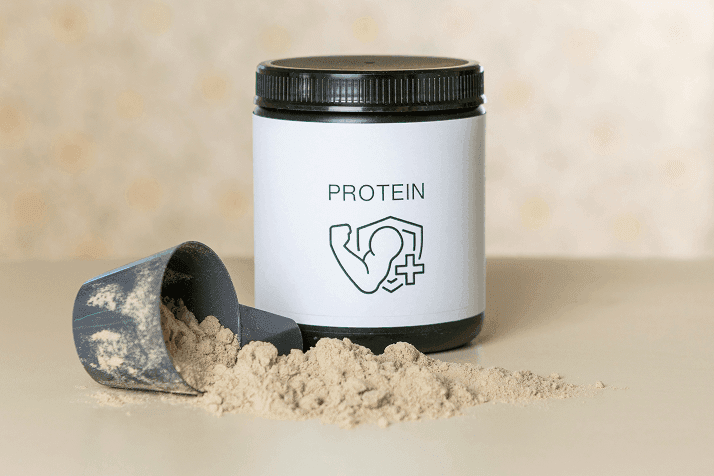
A supplement should solve a named problem. Creatine can support repeated high-intensity work. Protein powder helps when food does not get you to your protein target. Caffeine can improve alertness and performance. A vitamin can correct a deficiency.
"I want more gains" is not a named problem. It is how people end up with six tubs, a tingling face, and the same training log as last month.
This guide ranks popular gym supplements by evidence and use case. The question is not whether an ingredient produced a statistically significant result somewhere. It is whether the expected benefit is meaningful for your training, diet, health, and budget.
We sell a workout tracker, not supplements. We have zero financial incentive to recommend anything here.
Key takeaways: Creatine monohydrate is the clearest general-purpose option for resistance training. Protein powder is convenient food, useful when normal meals leave a protein gap. Caffeine can improve performance, but tolerance, anxiety, heart symptoms, and sleep change the trade-off. Beta-alanine helps mainly with hard efforts lasting roughly 1-4 minutes. Vitamin D and other micronutrients should solve a diagnosed or likely deficiency, not decorate a stack. BCAAs add little when total protein is already adequate.
Do supplements actually work for muscle growth?
Some do. Most are either small advantages or tools for a specific gap. That is not the message printed on the front of the tub, because "possibly useful in a narrow context" is terrible packaging copy.
The International Society of Sports Nutrition (ISSN) published a comprehensive review categorizing supplements into evidence tiers. We use it as a starting framework, then check the newer evidence cited below through August 2026.
Here's the full breakdown:
| Supplement | Real improvement | Evidence | Verdict |
|---|---|---|---|
| Creatine | Modest strength and fat-free-mass benefit with training | Strong | Good general option |
| Protein powder | Helps you reach total daily protein | Strong for protein intake | Use when food falls short |
| Caffeine | Small-to-moderate acute performance benefit | Strong | Useful if tolerated and sleep is protected |
| Beta-alanine | Small benefit for hard efforts lasting about 1-4 min | Moderate | Situational |
| Omega-3 | Modest soreness reduction | Limited | Situational |
| Vitamin D | Corrects low status; no consistent performance boost when status is adequate | Strong for deficiency treatment | Test when deficiency is plausible |
| Ashwagandha | Mixed, product-specific stress and performance evidence | Limited to moderate | Discuss safety and use case first |
| BCAAs | Little added value with adequate complete protein | Strong | Usually skip |
| Glutamine | No consistent gym-performance benefit in healthy lifters | Moderate | Usually skip |
| Testosterone boosters | No reliable muscle-building effect | Weak or negative | Skip |
| ZMA | No special sleep or performance effect when intake is adequate | Limited | Treat deficiencies instead |
Tier 1: What supplements should I take for the gym?
These are the three products most likely to earn a place, but they do different jobs. You do not automatically need all three.
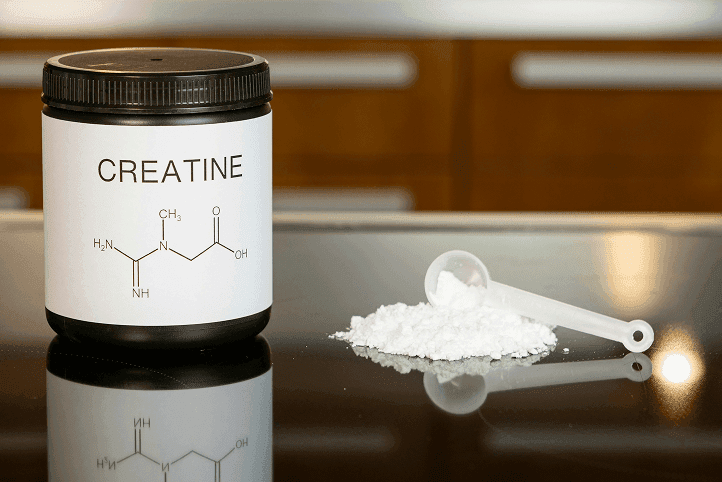
Creatine monohydrate
Creatine is the single most researched supplement in sports science. A 2024 meta-analysis by Schoenfeld, Forbes, and Candow found it increases upper-body strength by 4.43 kg and lower-body strength by 11.35 kg compared to placebo. A dose-response meta-analysis of 61 trials by Ashtary-Larky et al. (2025) found +1.39 kg fat-free mass.
What to expect: a modest average advantage in strength or fat-free mass across studies, with plenty of individual variation. Creatine makes good training slightly more productive. It does not create a fixed percentage gain for every lift.
How to take it: 3-5g of creatine monohydrate daily. No loading required. No special timing. With food. Every day. We wrote a complete creatine guide with all the details.
Who may value it most: people doing repeated high-intensity training, vegetarians or vegans with lower dietary creatine intake, and older adults combining it with resistance training.
Cost: Plain monohydrate is usually one of the least expensive sports supplements. Compare the cost per 3-5 g serving, not the size of the tub.
Protein powder
Protein powder is food in a convenient form. It belongs here because convenience can be the difference between regularly reaching a protein target and regularly missing it.
A 2018 meta-analysis by Morton et al. analyzing 49 studies and 1,863 participants found protein supplementation with resistance training increased fat-free mass by 0.30 kg and 1-RM strength by 2.49 kg compared to placebo.
What to expect: the cited meta-analysis found a small average improvement from additional protein during resistance training. It did not prove that powder is better than an equivalent amount of complete protein from food. If your diet already provides enough protein, another shake is mostly another snack.
How to use it: Choose a serving that fills the gap left by food. Around 1.6 g/kg/day of total protein is a useful evidence-based reference point for many resistance-trained adults, with individual needs and preferences varying. Several dairy and plant proteins can work; total intake and overall diet matter more than the label category.
Who benefits most: People who struggle to reach an appropriate protein intake with normal meals, including some busy people and lifters dieting on fewer calories.
What to check before buying: Protein per serving, ingredients you tolerate, independent quality testing, and cost. A mass gainer can be convenient, but it is usually easy to reproduce with food and a basic protein powder.
Caffeine
Caffeine is the most widely used stimulant in the world, and it actually works for exercise performance. A 2018 meta-analysis by Grgic et al. found it improves muscle strength and endurance.
What to expect: a small-to-moderate acute benefit that depends on the task, dose, tolerance, and individual response. Do not translate a study average into a promise of one or two extra reps on every exercise.
How to take it: start low, often around 1-3 mg per kg taken 30-60 minutes before training, and judge the response. Higher research doses are not a target to chase. Avoid turning a stronger session into a worse night of sleep.
Who benefits most: lifters who tolerate caffeine and can use it without pushing sleep later. Some people feel little; others get anxious, shaky, or uncomfortable at modest doses. Regular use can also reduce the noticeable effect.
About pre-workout supplements: Read the full label, not the lightning bolt on the front. Caffeine often drives the immediate effect, while ingredients such as beta-alanine and creatine depend on repeated dosing rather than one dramatic scoop. Proprietary blends make useful dose checks difficult. Coffee or a clearly dosed single ingredient is often easier to evaluate.
Tier 2: Supplements that are situational
These work in specific scenarios. They're not essential for most people, but they're not scams either.
Beta-alanine
Beta-alanine increases carnosine in your muscles, which reduces the burning feeling during high-rep sets. A 2012 meta-analysis by Hobson et al. found a median improvement of 2.85% in exercise performance.
The catch: The clearest evidence is for hard efforts lasting roughly 1-4 minutes. That is more relevant to some circuits and repeated high-rep work than to a brief set of three. A 2026 meta-analysis did not find a benefit for repeated sprint ability.
How to take it: Research often uses 3.2-6.4 g daily in smaller doses. The tingling sensation is usually temporary and becomes more noticeable with a large single dose. Muscle carnosine rises gradually rather than from one pre-workout scoop.
Verdict: Situational for sports and sessions dominated by sustained hard efforts. It is a lower priority for typical strength work.
Omega-3 (fish oil)
Omega-3 fatty acids, including EPA and DHA, may affect inflammation and perceived soreness. A 2025 review of 14 randomized controlled trials reported possible soreness reductions, but protocols and findings varied.
The catch: The 2-year VITAL study of 1,054 healthy adults found neither vitamin D nor omega-3 improved physical performance measures including grip strength, walking speed, and balance. It helps with recovery, not performance.
Verdict: Diet quality and health context are better reasons to consider omega-3 than expecting a visible gym-performance boost.
Vitamin D
Vitamin D is essential for bone health, immune function, and muscle function. But supplementing only helps if you're deficient. And many people are, especially in northern latitudes, during winter, or if you spend most of your time indoors.
The catch: Extra vitamin D is not a reliable performance enhancer when status is already adequate. A blood test and local clinical guidance are more useful than guessing from the weather.
Verdict: Test when deficiency is plausible, then choose a dose with a clinician or pharmacist. More is not better with a fat-soluble vitamin.
Ashwagandha
Ashwagandha is marketed for stress, sleep, testosterone, and strength. A 2025 meta-analysis by Albalawi reported a reduction in cortisol, but the included extracts, doses, populations, and outcomes varied.
The catch: Extracts and studies differ, perceived-stress results are not consistently positive, and a hormone change inside the normal range is not proof of more muscle. Ashwagandha can also cause side effects and interact with medications or medical conditions.
Verdict: Not a default gym supplement. If you are considering it for stress or sleep, discuss the product and your health context with a clinician or pharmacist rather than treating it like harmless protein powder.
Supplements that are a waste of money*
These are popular, heavily marketed, and have no meaningful evidence for healthy people who eat a reasonable diet.
*Some have narrow edge cases for competitive athletes. We note those below.
BCAAs (branched-chain amino acids)
BCAAs provide only three essential amino acids. Muscle protein synthesis needs the full set, which complete protein foods and common protein powders already provide. If total protein is adequate, BCAAs are unlikely to add a meaningful muscle-building benefit.
*What about fasted training? A complete protein meal or shake usually solves the problem more directly. If someone cannot tolerate food around training, that is a nutrition-planning question, not evidence that every lifter needs an amino drink.
Glutamine
Glutamine is abundant in the body and also comes from food. Studies have not found a consistent recovery or performance benefit from routine supplementation in healthy lifters. Clinical uses in specific medical settings are a different question from gym performance.
Clinical uses of glutamine do not automatically transfer to healthy lifters. If a medical or gastrointestinal condition is the reason you are considering it, get advice for that condition rather than borrowing a gym dosage from social media.
Testosterone boosters (tribulus, D-aspartic acid, fenugreek)
Ingredients such as tribulus, D-aspartic acid, and fenugreek have not produced a reliable muscle-building benefit across healthy trained adults. Products also combine different ingredients and doses, which makes the category hard to evaluate from one headline study.
A supplement can change a lab marker without producing more muscle or better training. Judge these products by meaningful outcomes, not a temporary hormone graph.
ZMA (zinc, magnesium, B6)
A 2024 study in healthy active males with adequate micronutrient intake found ZMA had no effect on sleep quality, sprint performance, or next-day recovery. The marketing claims about "deep and restful sleep" are not supported.
*One caveat: Athletes with heavy sweat losses or very restrictive diets can deplete zinc and magnesium. If blood work shows a deficiency, supplement those minerals individually. They're cheaper and better dosed than the ZMA formula. The combo itself has no special synergy.
Fat burners
Many fat burners rely on caffeine or other stimulants, sometimes inside blends that make the dose hard to judge. Any short-term increase in energy expenditure is usually small beside the sustained calorie deficit, while sleep, anxiety, heart rate, and blood pressure can move in the wrong direction.
Mass gainers
Mass gainers combine protein with a large carbohydrate serving. That can be convenient for someone who struggles to eat enough, but the serving sizes and price often hide how ordinary the ingredients are. Compare one with a homemade shake or an extra meal before paying for convenience.
How much do supplements matter?
There is no credible percentage split that assigns muscle growth to training, food, sleep, and supplements. The variables interact, and the answer changes by person.
The decision order is still clear. First, follow a program you can repeat. Train with enough effort, record your work, eat enough protein and energy for your goal, and protect sleep. Then look for a specific gap a supplement can fill.
Creatine and caffeine can add a measurable edge. Protein powder can make consistency easier. None of them can tell you why your squat has stalled for six weeks. Your training record can. Track weekly sets, progression, and RIR before building a supplement shelf.
When to take each supplement
Timing matters less than consistency for most supplements. But here's a practical schedule:
| Supplement | When | With food? | Notes |
|---|---|---|---|
| Creatine | Any time, daily | Optional | Consistency matters more than timing |
| Protein | When convenient to hit daily target | Either way | Post-workout window is overblown. Total daily intake matters. |
| Caffeine | Before training, allowing time for the effect | Optional | Leave enough time to protect your sleep |
| Beta-alanine | Any time, daily (split doses) | Optional | Takes 2-4 weeks to build up |
| Omega-3 | Follow the product or clinician guidance | Often easier with a meal | Check medication interactions |
| Vitamin D | Follow clinician or local guidance | Usually with a meal | Use a dose appropriate to measured risk or status |
| Ashwagandha | Product-specific | Product-specific | Discuss safety and interactions first |
The simplest stack is often one item: creatine monohydrate at 3-5 g daily. Add protein powder only when food leaves a protein gap. Use caffeine only when it helps the session without harming sleep. Everything needs a reason.
Before adding another tub, check the training. Hypro tracks weekly sets, progression, and consistency so you can see whether the foundation is moving.
Try Hypro free
Maciej Glowacki
Founder and CEO of Hypro. Built the platform from the ground up with years of hands-on lifting experience.